021. What Is Release, really?
What Is Release, Really?
An exploration of what we hold, where our energy goes, and how we create the conditions for change.
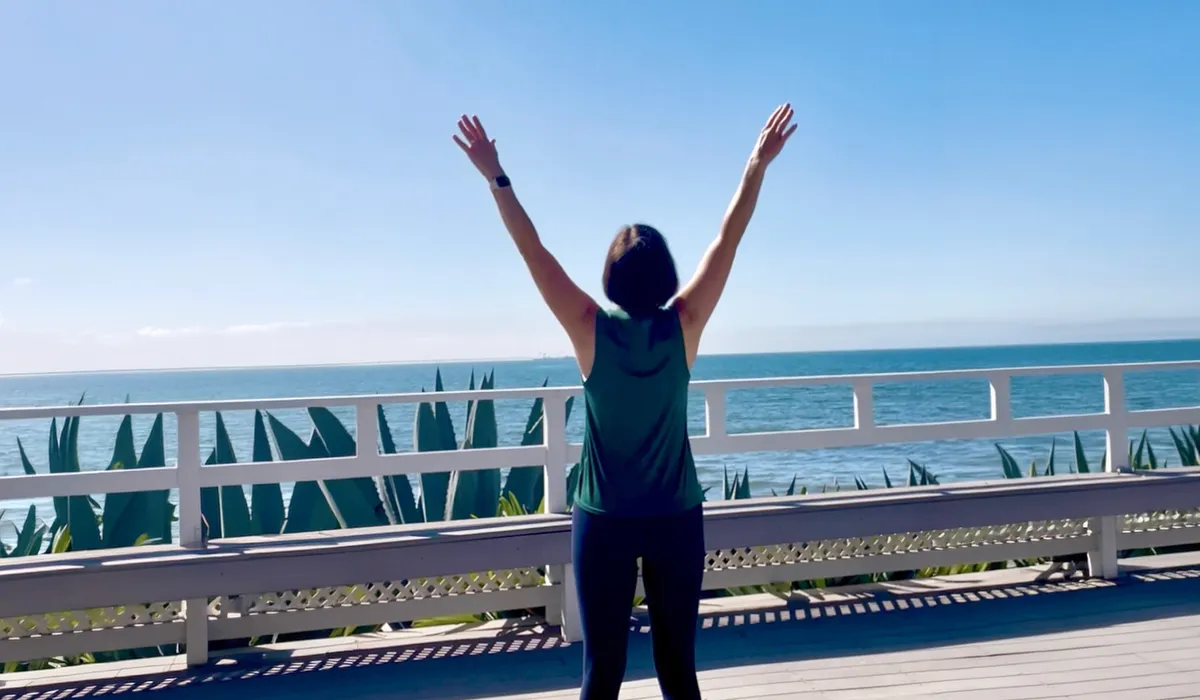
As the seasons shift, Nature offers us a beautiful reminder of release. Leaves change color and fall, the light shifts, and familiar rhythms begin to change.
We often associate this time of year with letting go. Releasing tension, releasing stress, releasing what no longer serves us.
And there is certainly value in letting go.
But what does RELEASE really mean when we consider the complexity of our bodies and the lives we're actually living?
What if RELEASE isn't only about letting go?
What if it's also about recognizing the conditions shaping our responses, understanding where our energy and internal resources are going, and exploring what might support us differently?
Our Bodies Are Always Responding
Every day, our bodies experience and respond to an astonishing range of influences.
The physical demands of our work, the emotional experiences we navigate, the environments we inhabit, the pace of our schedules, and the expectations we place upon ourselves all contribute to how we feel, move, breathe, and respond.
These influences don't exist in isolation.
Our physical experiences can influence our emotional state. Our emotional experiences can shape how we move and breathe, what we anticipate or expect. Our energy, attention, and capacity to respond can shift depending on the conditions we're living within, each and every day.
And our bodies continually adapt.
We develop patterns of movement, tension, attention, and behavior that help us meet the demands of our lives. Some become so familiar that we barely notice them.
We can be quick to label familiar patterns as bad habits that need correcting or rewiring. But what if we considered them differently?
These patterns may reflect the body's intelligent response to a demand, finding a way to get the job done and adapting in the process.
A pattern of holding may provide stability. A particular response may help us navigate a demanding situation. What we experience as tension or effort may reflect the body's attempt to support us.
Before deciding that something needs to be released, perhaps we can become curious about what that response has been helping us do.
Where Are Our Resources Going?
Release is less about forcing change or chasing a permanent state of relaxation, and more about intentionally looking at where we might be expending our energy and precious internal resources at any given moment or season of life.
This isn't about treating every demand on our energy as something negative.
Our resources allow us to participate in life. We use them to work, create, care for others, move, connect, and navigate challenges. Some experiences are demanding and deeply worthwhile.
But we can also become accustomed to patterns of effort that continue long after the original conditions have changed.
We might carry unnecessary muscular tension through ordinary activities, maintain a pace that leaves little room for recovery, or find ourselves responding to familiar situations in ways that require more of us than we realize.
The invitation is not to judge these patterns, but to recognize them.
Where is my energy going?
What is this response helping me accomplish?
Does it continue to support me in the way I need right now?
And might there be another way?
These questions open the possibility of release without assuming that something is wrong or needs to be fixed.
Recognizing the Conditions, Not Just the Response
It's tempting to focus on the experience we want to change.
We notice tension and try to relax it. We feel tired and look for more energy. We experience discomfort and search for a way to make it disappear.
But our responses are connected to the conditions in which they arise.
The way we sit and move throughout the day, the opportunities we have for rest, the pace of our lives, our emotional experiences, and the environments around us can all influence what our bodies are being asked to do.
Sometimes a response may be appropriate for the conditions we're living within.
And sometimes those conditions are asking more of us than we have available.
This is where I find it helpful to shift the question from How do I get rid of this? to What might be contributing to this experience?
We may not always be able to change the larger circumstances of our lives. But recognizing their influence can help us identify where a different choice, a small adjustment, or an additional source of support might become possible.
A Familiar Example: The Digital Slump
Consider this: most of us spend hours barely moving, glued to our screens, stuck in the same handful of positions. We don't even notice how still we are.
Have you noticed what happens to your body when you're absorbed in your screen?
Do your shoulders gradually creep toward your ears? Does tension begin to build through your neck? What happens to your breathing?
Have you ever caught yourself holding your breath while concentrating, or realized you've been breathing in the very shallows of your breath? There's even a name for this commonly reported experience: screen apnea.
And perhaps the bigger question is, how often do these patterns happen without us noticing at all?
Over time, these routines shape more than just our muscles. Our entire body can begin to experience and organize differently. Certain areas may feel less free to move, while more familiar patterns become reinforced. Our muscles, joints, fascia, and other tissues respond to how we use them, and those adaptations can shape how we feel when we move.
Fascia plays a big role in this conversation.
It's a continuous, web-like network of connective tissue that runs throughout the body, surrounding and connecting muscles, organs, nerves, and blood vessels.
But fascia doesn't just hold things together. It also helps transmit force, acts as the primary sensory organ, a body-wide communication system, and allows layers of tissue to slide, glide, and move in relationship to one another.
How these tissues respond depends on many factors, including the movement, loading, and physical demands we experience regularly.
And when our days offer very little variety in movement, we may begin to notice that certain areas feel less mobile, more restricted, or simply harder to move.
This is why RELEASE isn't always as simple as telling a muscle to relax.
We have to consider the conditions that have shaped the body's response in the first place.
Awareness Becomes the Practice
Before we can recognize our patterns or explore different responses, we first need to become aware of what we're experiencing.
And in the pace of everyday life, that doesn't always happen automatically.
Step one is to push your own pause button.
Be present. Tune in. Join the conversation with your body.
How often do we move through our days so absorbed in what we're doing that we lose touch with what we're experiencing along the way?
When we pause and bring our attention back to ourselves, we create an opportunity to recognize what's happening within us and around us.
How is our body responding to the demands of this moment? Where is our energy going? What are we feeling, physically and emotionally?
We don't have to immediately do something with that information. The first step is becoming present enough to recognize it.
And the more we practice bringing that awareness into our everyday lives, the more familiar this conversation becomes.
Awareness begins to move beyond something we occasionally remember to do and becomes part of how we experience everyday life.
From there, we can begin recognizing relationships between the conditions we're living within and the ways our bodies respond.
We might notice that our shoulders elevate whenever we're deeply focused on a screen, that our breathing changes during a demanding conversation, or that our energy feels different after spending time outdoors.
Once we recognize a pattern, we have an opportunity to explore.
Perhaps we change our position, introduce a little movement, raise our gaze, or shift something about the conditions we're experiencing.
And then we return to awareness.
What changed? What stayed the same? What might that experience be telling us?
Over time, this becomes an ongoing conversation. We learn to recognize when a familiar response is supporting us, when another option might be helpful, and what conditions we may want to nurture more intentionally.
Awareness is both the practice itself and the foundation for discovering what else might be possible.
What Happens When We Change the Conditions?
Let's return to that familiar Digital Slump.
You've been sitting at your computer, absorbed in your work. Your gaze has barely left the screen, your hands have been hovering over the keyboard, and your body has spent much of the day in a fairly limited range of movement.
You could remind yourself to sit up straight, relax your shoulders, or take a deep breath. And those reminders may be helpful.
But what if you explored changing the conditions instead?
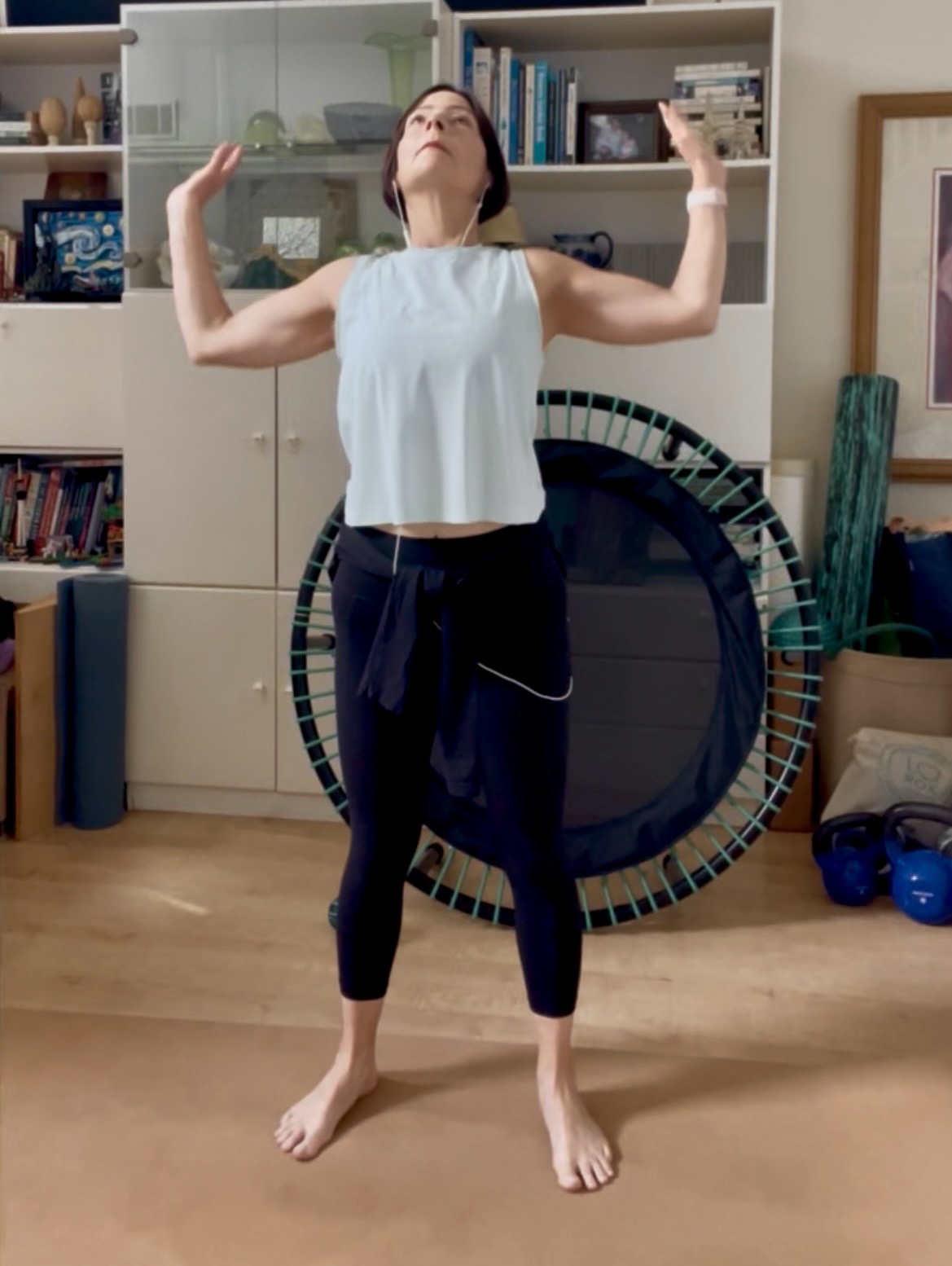
Change your relationship with gravity. Through a gentle Manubrium Lift, we can explore a different relationship between the upper breastbone, head, shoulders, pelvis, and spine. Quite simply, imagine leading with the spot where your clavicles (collarbones) meet- called the Manubrium, gently lifting up and out at approximately 45 degrees. As if guided by a laser attached at this site. This small shift can invite the whole body to reorganize in relation to gravity, potentially finding a more comfortable sense of balance without forcing a rigid posture. Notice what happens to the effort you're using and how your ribs move now with your breath.

Raise your gaze. When we're absorbed in screens, our eyes spend long periods focused on something close to us. Shifting our gaze toward something farther away—a tree outside the window, the landscape, or the horizon—changes the visual demands of the moment and can influence our nervous system's response. Moving from sustained near-focus toward a broader, more distant view may offer an opportunity to shift out of intense alertness and into a more restful state. Notice whether your head, shoulders, breathing, or overall sense of ease respond.
Introduce more movement. After hours spent in a limited range of positions, a few minutes of varied movements can change how effort is distributed and give our tissues opportunities to move and flow in different ways. This is the thinking behind my five-minute Release and Revive Flow for the Digital Slump: encouraging fascia and other tissues to slide and glide, supporting circulation and lymphatic movement, creating space, and inviting the body to rediscover some of its natural rhythm and energy through movement.
These aren't prescriptions for achieving a particular sensation. They're opportunities to explore how changing one condition might influence others.
Perhaps your breathing feels more available, your shoulders require less effort, or your attention shifts. Perhaps you discover that what you really need is a break from the screen altogether.
And sometimes, you may not notice much of a change at all.
That's useful information, too.
Each exploration brings us back to the same ongoing conversation: What am I experiencing? What conditions might be contributing? What happens if I introduce something different?
And what can I learn from the response?
Releasing Our Attachment to the Outcome
There is another dimension of RELEASE that I think is meaningful to consider: releasing our attachment to a specific outcome.
This one trips most of us up.
When we explore our wellbeing, we often begin with an intention. Perhaps we'd like to move more comfortably, have more stamina or greater strength, breathe more freely, have greater energy, or experience more ease in our everyday lives.
There's nothing wrong with wanting those things. Our intentions can help guide the choices we make and the conditions we choose to nurture.
But sometimes we become so focused on achieving a particular result that we stop paying attention to what we're actually experiencing.
We introduce a movement or practice expecting to feel a certain way. And when our body responds differently, we may decide that we haven't done enough, that the practice isn't working, or that something needs fixing.
What if we allowed room for curiosity alongside our intentions?
We can explore a change with a sense of purpose while remaining open to whatever we discover.
We might notice the shift we were hoping for. Or perhaps something entirely different changes. Maybe we recognize that our body needs something we haven't even considered.
Each experience offers information that can help us better understand our responses and the conditions that support us.
Releasing attachment to the outcome doesn't mean abandoning our intentions. It means allowing ourselves to learn from the experience without insisting that it unfold in one particular way.
And sometimes, that freedom from expectation creates space for possibilities we might otherwise have overlooked.
Release as an Ongoing Relationship
Of course, not every condition shaping our wellbeing can be changed with a movement practice or a shift in perspective.
Some are woven into the circumstances of our lives, others into the conditions within our bodies, and many are beyond our immediate control.
But recognizing their influence can help us become more intentional about where we invest our resources, where we look for support, and what we choose to nurture.
Perhaps RELEASE isn't only about getting rid of what we hold. I think it's about understanding what shapes our responses and discovering that we may have more options than we realized.
It's an ongoing process of recognizing the conditions of our lives, noticing how we're responding, and exploring whether something different might support our wellbeing.
Sometimes that means letting go. Sometimes it means nurturing a new condition, choosing a different response, or recognizing the value of what we're already doing.
And sometimes it means allowing ourselves to move forward without needing to know exactly what the outcome will be.
Nature reminds us that change happens in relationship with conditions, rhythms, and seasons. Our own experience of wellbeing is also dynamic, shaped by the lives we're living and the ways we participate in them.
Perhaps RELEASE is a little less about reaching a state of having let go, and more about creating the awareness, support, and possibilities that allow us to keep moving forward.
This month's rhythm is RELEASE.
Across LEAP Wellness, we're exploring this rhythm through movement, our relationship with Nature, and the everyday conditions that shape how we feel, move, respond, and live.
Inside Seasonal Rhythm, we take that exploration deeper, with practices and reflections that invite you to discover what these ideas might mean in your own body and everyday life.
Seasonal Rhythm ←tap. Come explore RELEASE with us.